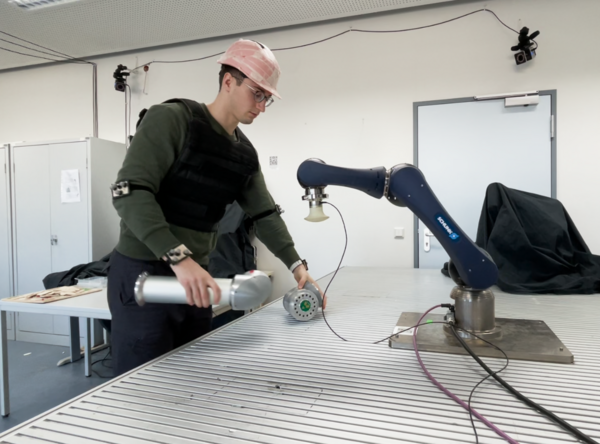
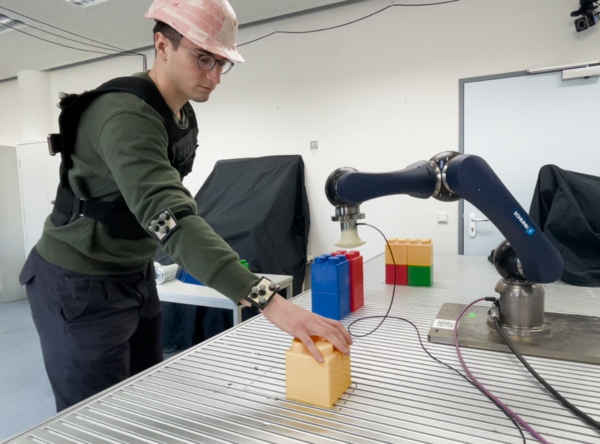
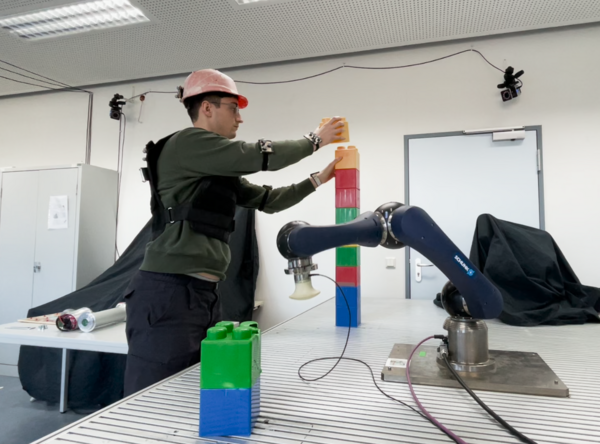
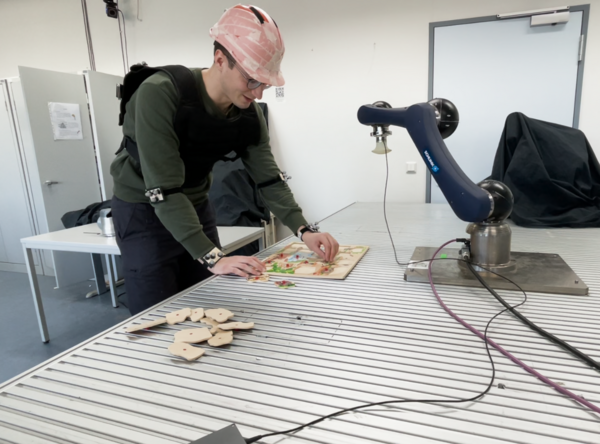
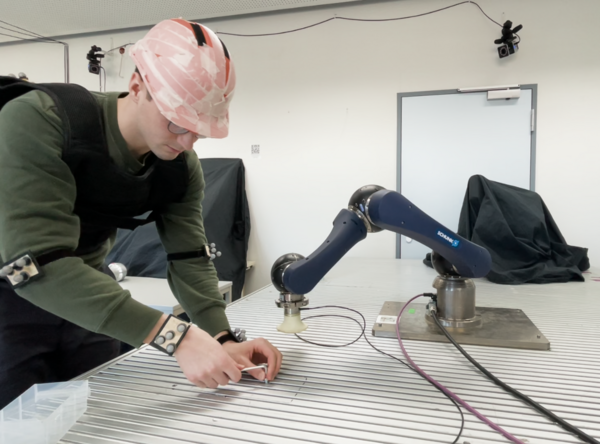
Autonomous robots are projected to augment the manual workforce, especially in repetitive and hazardous tasks. For a successful deployment of such robots in human environments, it is crucial to guarantee human safety. State-of-the-art approaches to ensure human safety are either too restrictive to permit a natural human-robot collaboration or make strong assumptions that do not hold for autonomous robots, e.g., knowledge of a pre-defined trajectory.
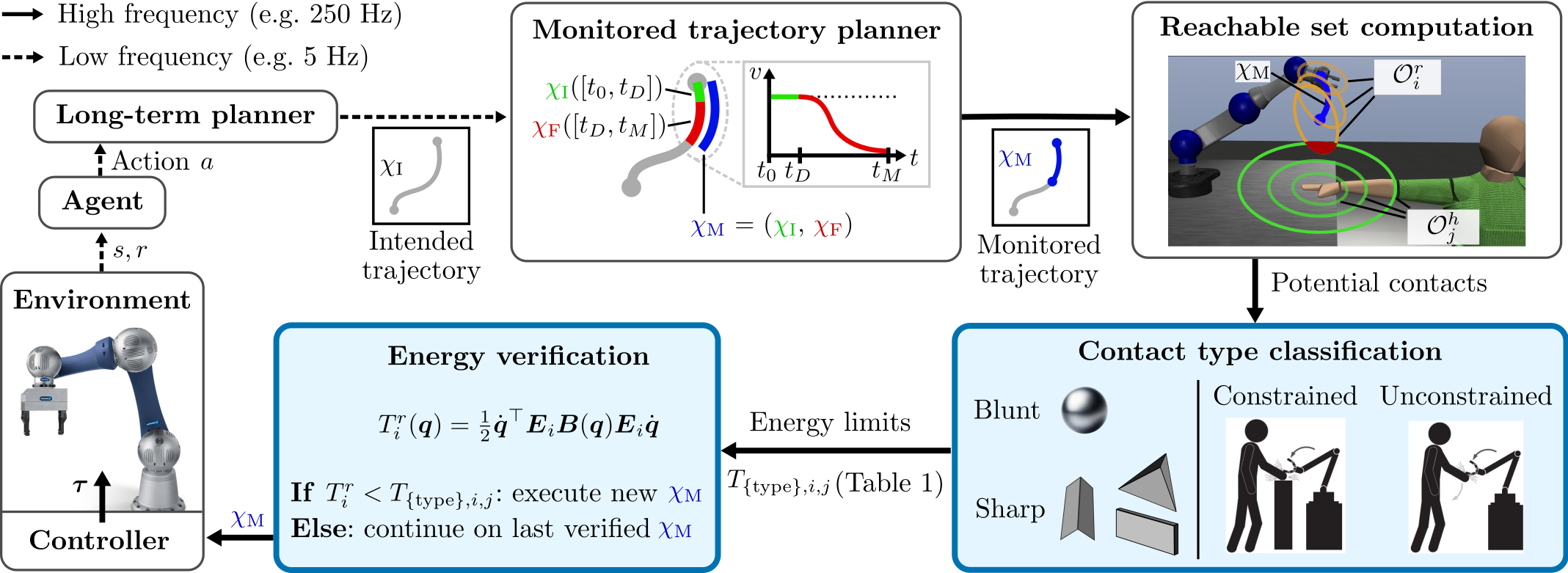
We propose SARA shield, a power and force limiting framework for AI-based manipulation in human environments that gives formal safety guarantees while allowing for fast robot speeds. As recent studies have shown that unconstrained collisions allow for significantly higher contact forces than constrained collisions (clamping), we classify potential contacts by their collision type using reachability analysis. For each contact type, we then verify that the kinetic energy of the robot is below pain and injury thresholds for the respective human body part in contact.
Our real-world experiments show that SARA shield satisfies the contact safety constraints while completing collaborative tasks 15.9% faster than the best-performing state-of-the-art approach.